- Your cart is empty
- Continue Shopping
Kuueza Korner – Week 79 Edition
- Posted on
-
 Posted by:
Philip Igwe
Posted by:
Philip Igwe - 0 comments
- Categories: News
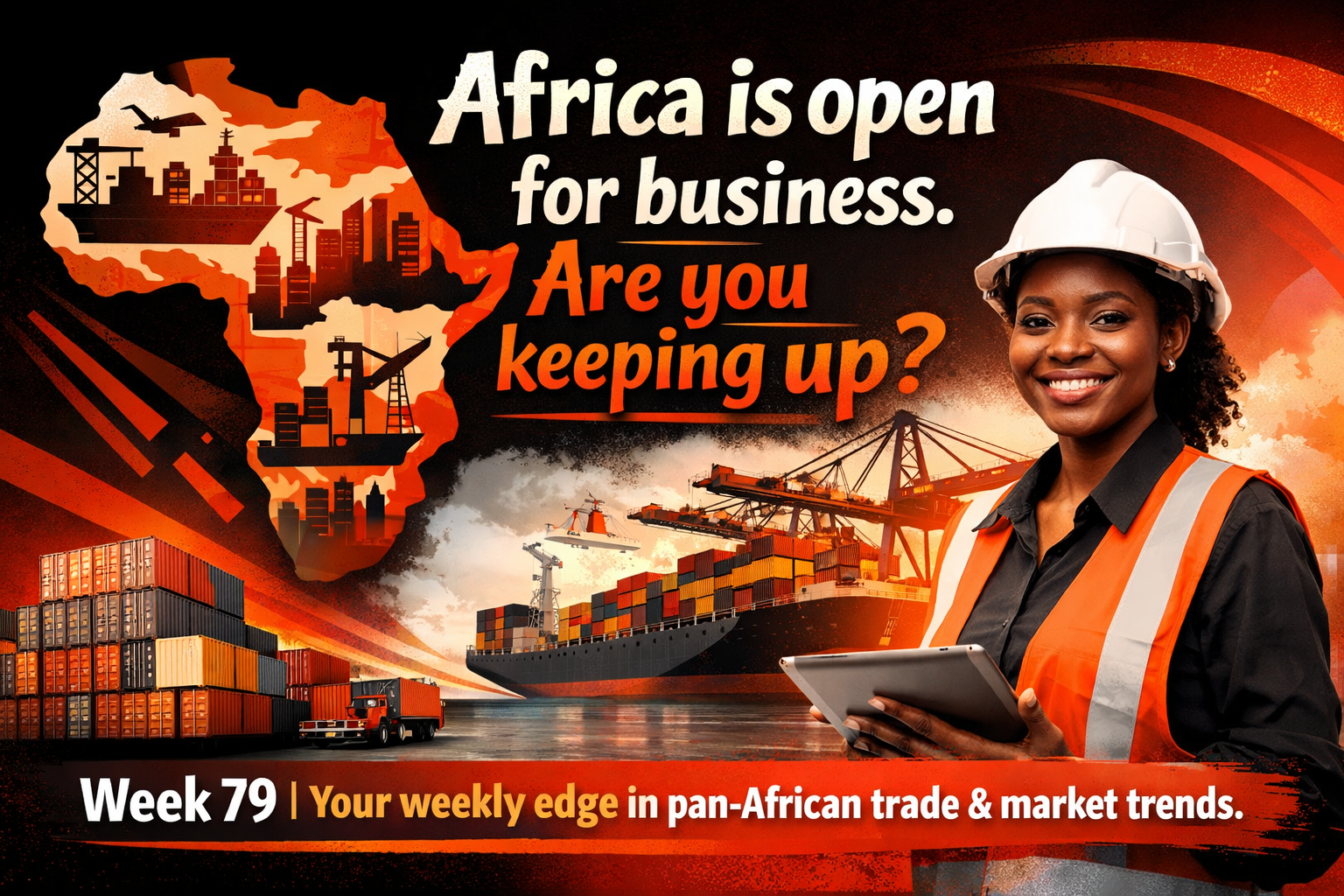
Welcome to Kuueza Korner, Week 79!
Good to have you here. Every week, the Kuueza Korner brings you the trade intelligence, market trends, vendor resources, and African business news that matter most to your growth. This week we are looking at the big moves shaping pan-African trade, what new and growing vendors need to know, a word from our CEO on resilience, and five business headlines you cannot afford to miss. Settle in, this is a good one.
4.0%
Africa's projected GDP growth in 2026
UN WESP 2026 Report
6.3%
Africa's merchandise export growth, H1 2025
WTO Trade Outlook 2025
16%
Share of intra-African trade in total African trade
MCB Trade Report 2025
Opening Note
Africa is not waiting for permission to grow.
If you have been watching the headlines, you already sense it. If you have been in the market, you are feeling it. African trade is moving, and the direction, despite global noise and uncertainty, is forward. This edition of Kuueza Korner takes a hard, honest look at where the continent's trade and market landscape stands right now, what is driving the momentum, and where the real opportunities lie for businesses like yours.
The world's trade systems are being redrawn. Tariffs, alliances, and supply chains are shifting in ways not seen in decades. For Africa, this disruption is not just a threat. For the first time in a long time, it is also a window.
"Let this be Africa's moment , not of marginalisation, but of renaissance."
, Prof. Benedict Okey Oramah, President, Afreximbank | African Trade Report 2025The Growth Story
The numbers behind the momentum.
According to the United Nations World Economic Situation and Prospects 2026 report, Africa's economic growth is projected to reach 4.0% in 2026, climbing from 3.5% in 2024 and 3.9% in 2025. That upward trajectory is not accidental. It reflects deliberate macroeconomic stabilisation in several key economies, growing consumer spending, and a sustained push toward intra-regional investment.
African merchandise exports recorded a 6.3% growth in the first half of 2025, according to the WTO Trade Outlook , driven by precious metals, agricultural commodities, and transport equipment imports. Only Asia outperformed Africa in export growth globally during that period, making the continent's performance all the more remarkable given the turbulent external environment.
East Africa
5.8%
Highest regional growth projected for 2026, led by Ethiopia and Kenya, with strong renewable energy expansion.
West Africa
4.4%
Second-largest intra-African trading sub-region. Home to some of Africa's most active organic and agricultural export corridors.
North Africa
4.1%
Slight moderation from 4.3% in 2025, but remains a strong gateway for pan-African and Mediterranean trade flows.
Southern Africa
2.0%
Constrained by structural challenges and US tariff exposure, yet still the primary driver of intra-African merchandise trade at 41.1%.
What to Watch
Growth is real. So are the headwinds.
No honest market briefing ignores the friction. The expiry of the African Growth and Opportunity Act (AGOA) continues to create uncertainty for exporters, particularly in the apparel and textile sectors that relied on preferential US market access. Meanwhile, progress on the African Continental Free Trade Area (AfCFTA) remains slow and uneven, even as its ambition remains the most transformative trade policy framework on the continent.
Food price inflation remains above 10% in many African economies, reflecting structural vulnerabilities and climate shocks that continue to squeeze household purchasing power. Debt burdens are heavy, with Africa's average public debt-to-GDP ratio sitting at approximately 63% in 2025, limiting how aggressively governments can invest to stimulate growth.
The Intra-African Trade Gap , And Why It Matters
Here is a number that should stop every business owner reading this: intra-African trade accounts for just 16% of Africa's total trade. Compare that to the European Union at 70%, or intra-Asian trade at around 60%. The continent that has the second-largest population in the world, some of the fastest-growing middle classes globally, and an enormous diversity of complementary resources , trades mostly with itself at a rate that lags far behind its potential.
But that gap is also an opportunity. Every percentage point of intra-African trade growth represents billions of dollars in new commerce, new routes, new partnerships, and new demand for exactly the kinds of organic, quality African products that Kuueza was built to move.
Vendor Notice
Nigeria Shipment Drop-Off , Commencing March 31st
Important update for all vendors shipping from Nigeria
We hope this message finds you well. This is to inform all vendors shipping from Nigeria that product drop-off schedules will commence from Monday, March 31st, 2026.
Drop-off locations will be communicated to each vendor individually. Please ensure the following before bringing your product to the warehouse:
- All paperwork must be fully completed
- All pre-shipment instructions must be followed
- Products must meet all compliance and quality requirements
⚠️ Failure to meet these requirements may result in your product being left behind and additional charges incurred at your cost.
For questions or further assistance, reach us at info@kuueza.com
For Vendors: Getting It Right
New to exporting? Struggling to gain traction? Start here.
Whether you are just joining the Kuueza platform or have been on it for a while without seeing the results you expected, these three resources are for you. No fluff, just practical guidance to help you show up ready, avoid costly errors, and present your products in a way that wins international buyers.
Are You Export-Ready? A Self-Assessment Checklist
Check honestly. Every box matters before your product leaves your hands.
- My product has a clearly defined name, weight, and unit of measurement
- I have valid business registration documents ready
- My product has passed or is eligible for NAFDAC, SON, or relevant quality certification
- I understand the MOQ (Minimum Order Quantity) I can fulfil consistently
- My product is properly labelled with ingredients, origin, and expiry date where applicable
- I have completed all KYC and onboarding steps on the WeXchange platform
- I have read and understood the pre-shipment instructions from Kuueza
- My packaging can withstand international shipping without damage
- I have a reliable way to restock if a large order comes in
- I know who to contact at Kuueza if something goes wrong
Common Onboarding Mistakes
Mistakes vendors make — and how to avoid them.
01
Incomplete Documentation
Vendors show up without all required paperwork, causing delays or rejection. Fix: Complete every document before drop-off day, not on it.
02
Poor or Inconsistent Packaging
Products arrive damaged or looking different from what was listed online. Fix: Pack as if your buyer is watching. Test your packaging before shipping.
03
Vague Product Listings
Listings with no weight, no origin, and no clear description get ignored by buyers. Fix: Treat every listing like a sales pitch, not a form.
04
Ignoring Platform Communications
Vendors miss important updates because they do not check their email or platform messages. Fix: Check info@kuueza.com communications at least twice a week.
05
Unrealistic MOQ Setting
Vendors list quantities they cannot actually fulfil, damaging trust when orders come in. Fix: Start small and scale. Reliability beats ambition every time.
06
No Follow-Through After Onboarding
Vendors complete registration but never actively manage their storefront. Fix: Log in, update your listings, and stay visible on the platform.
Write to Sell
How to Write a Product Description That Sells Internationally
International buyers do not know your product the way your local customers do. Write for someone who has never heard of it.
1
Lead with what it is, not what you call it
Instead of "Ose Oji", write "Oilbean paste (Ose Oji), a fermented West African condiment used in soups and sauces." Give context before the name.
2
Include the key facts upfront
Weight, shelf life, storage instructions, allergens, certifications. Buyers need these to make a purchasing decision. Do not make them ask.
3
Mention the origin proudly
"Sourced from smallholder farmers in Benue State, Nigeria" adds authenticity and value. International buyers are paying for that story.
4
Say what it is used for
Tell the buyer how to use your product. "Ideal for health food retailers, African cuisine restaurants, and specialty grocery stores." Help them see themselves buying it.
5
Keep it clean and professional
No slang, no ALL CAPS, no excessive exclamation marks. Write the way you would want a buyer to speak about your product to their own customers.
CEO Spotlight
Watch & Learn
The Ultimate Weapon for Business Sustainability: Resilience
Stop reacting to change and start preparing for it. Kuueza CEO Maxwell Adew breaks down why resilience is not just a mindset, it is the defining edge for businesses that last. If you are building in Africa, this one is for you.
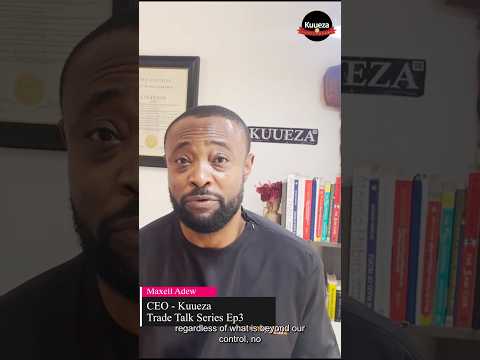
▶
Watch on YouTube
Featuring Maxwell Adew · CEO, Kuueza Limited
Trending This Week
5 African business stories you need to know.
From billionaire wealth surges to entrepreneurship grants, infrastructure deals, and fintech breakthroughs, here is your quick-read roundup of the biggest African business headlines this week.
Dangote Hits $32.5 Billion, Climbs to 64th on Bloomberg Billionaires Index
Tony Elumelu Foundation Deploys $16 Million to 3,200 African Entrepreneurs
African Banking Leaders Prioritise AI and Cybersecurity as Top Strategic Goals for 2026
BCG Report: Africa's Creative Industries Hold $150 Billion in Untapped Potential
Durban Seals Deal to Build Africa's First Superyacht Refit Hub
Editor's Note
Africa's trade story is still being written. Every vendor who ships, every merchant who lists, every buyer who chooses African , you are all part of that story. Thank you for being part of the Kuueza community. See you next week.
Author
Philip Igwe
Igwe Philip is the Team Lead for Nigeria. Loves to develop local SMEs and impacting his communities. Passionate about writing and telling stories creatively.
See all author post